
Eco Church
Stewarding God’s Creation
What does stewarding God’s creation mean? Here’s how we like to think of it:
“Cherishing what God has created for us and preserving it for future generations.
Walking with Christ in the world while treading lightly amongst his wondrous creation.”
We are falling short in our role as stewards of God’s creation. The climate and ecological crisis is causing unprecedented damage to the natural world and people across the globe. For future generations, the consequences of doing nothing becomes increasingly severe. Yet even though it can seem like a daunting issue, we are resolved to do something about it.
That’s where Eco Church comes in.
Eco Church
Eco Church is an environmental project set up and managed by A Rocha. The vision for Eco Church is for churches of all denominations to care for creation as an integral part of loving their neighbours and following God faithfully.
In 2018, St Luke’s Eco Church group was formed and the church was registered on the Eco Church scheme. We are dedicated to reducing our environmental impact and becoming better stewards of God’s creation, as outlined in St Luke’s Environmental Policy.
In 2021, we were awarded Silver status as an Eco Church and St Luke’s Parochial Church Council (PCC) agreed an ambitious target:
St Luke's church will be Net Zero by 2025. We met this target by using Climate Stewards to offset our outstanding carbon emissions while continuing to work on ways to reduce our emissions at source.
In 2025, we were awarded Give To Go Green match funding which enabled us to replace all our lighting with energy efficient lamps. And now, in 2026 we are actively working to replace our gas boilers with net zero heating alternatives, thereby eliminating all of our direct carbon emissions.
By doing so, we are doing our part in helping the Diocese of Winchester’s Net Zero Strategy and wider Church of England target of becoming Net Zero by 2030. See the timeline below on the upcoming targets for Net Zero.
The Eco Church scheme is helping to achieve this by offering practical ways in which we can reduce our footprint.
Current progress
Click on each of the categories below to find out more about specific environmental actions that we are already doing or will do in the future.
-
This category is about how St Luke’s is engaging people in environmental issues through our worship and teaching. Here are some examples of actions the church can take to improve its environmental credentials in this area:
✓ Ensure the environment is included in the prayers in services
✓ Have small group studies which focus on care for God’s earth
✓ Choosing songs in our worship which help celebrate God’s creation
-
The Eco Church scheme award points on the basis of how green our church buildings are. This includes the main church building, including the various rooms and offices within it as well as the vicarage. Multiple elements are assessed including the heating system, lights, window glazing and more. To improve our environmental rating in the buildings category we have done the following:
✓ Switched to LED lights
✓ Using recycling bins
✓ Switched to a green energy supplier
✓ Seeking to replace our gas boilers with a net zero carbon alternative heating system.
-
This category looks at how St Luke’s is using the land around the church for the benefit of nature. Although we have a relatively small plot of land to work with, here are some actions we can take to improve our eco-score in this area:
✓ Install bird boxes
✓ Build a bug hotel
✓ Plant bee and butterfly-loving plants
-
This category looks at how St Luke’s encourages our wider community and keep them informed about climate change. A Rocha, the organisation running the Eco Church scheme, have many good ideas which we can look into doing:
✓ Hosting environmental awareness events, for instance, for Fairtrade
✓ Keep the congregation informed about climate change in eco-related services and regular church notices
✓ Twin the toilets in St Luke’s church using TearFund’s Toilet Twinning scheme, thereby improving sanitation and hygiene in developing countries
A great way to get involved on a national level is to sign petitions demanding action on climate change. Have you considered writing to your MP? See this link for more information on what you can do… → Email your MP to reduce the plastic pollution in our oceans
-
How do the lifestyles of the people at St Luke’s tally with living in harmony with the world around us? While it is important for the church itself to be green, it is just as important for individuals to take the environmental stewardship message home with them and affect their daily lives. Some of the ideas on how the church can improve our lifestyles from an environmental perspective are listed below.
✓ Opt for an ethical pension (this is one of the most impactful actions you can do)
✓ Reduce meat (especially beef and lamb) and dairy consumption and buy locally sourced produce
✓ Reduce your transport emissions for example use public transport, walk, cycle, car share or replace your diesel/petrol car with an electric vehicle
✓ 5Rs – Refuse, Reduce, Reuse, Repurpose, Recycle
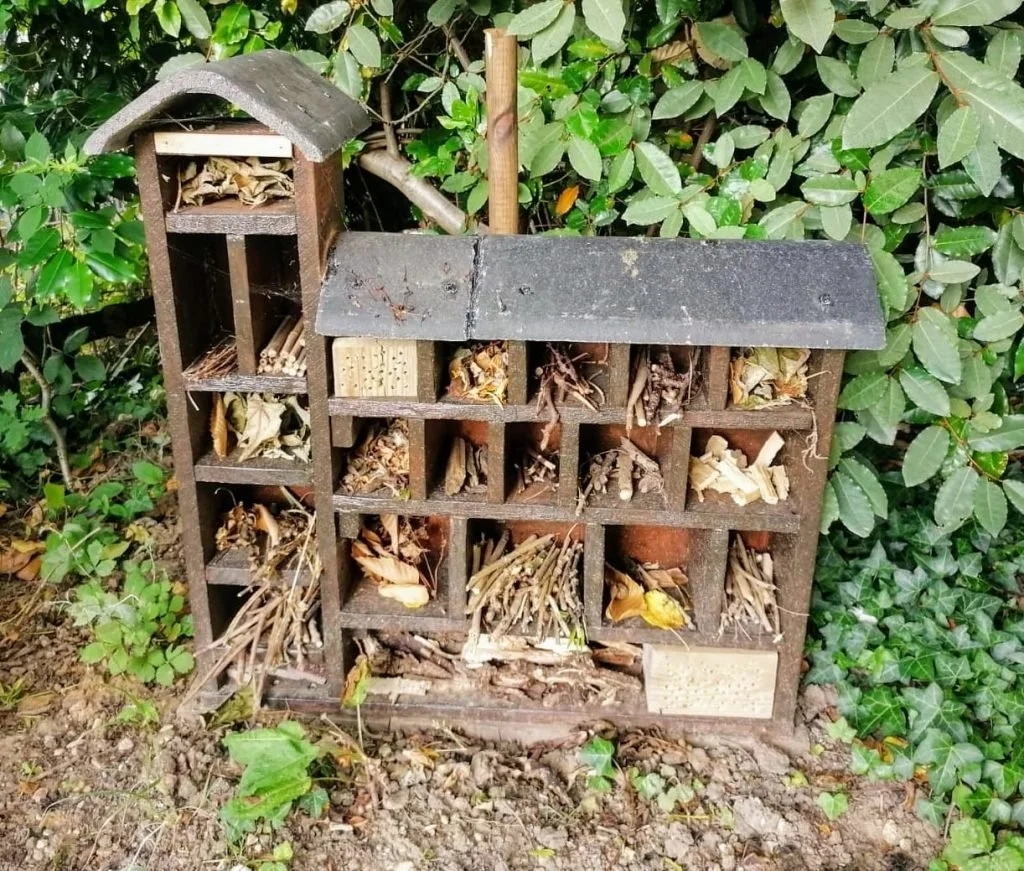
This is our ‘bug church‘, installed by the Eco Church group in 2019 and home to many insects and creatures. It’s situated behind the church building, beyond the rose garden. Do have a look if you get the chance.
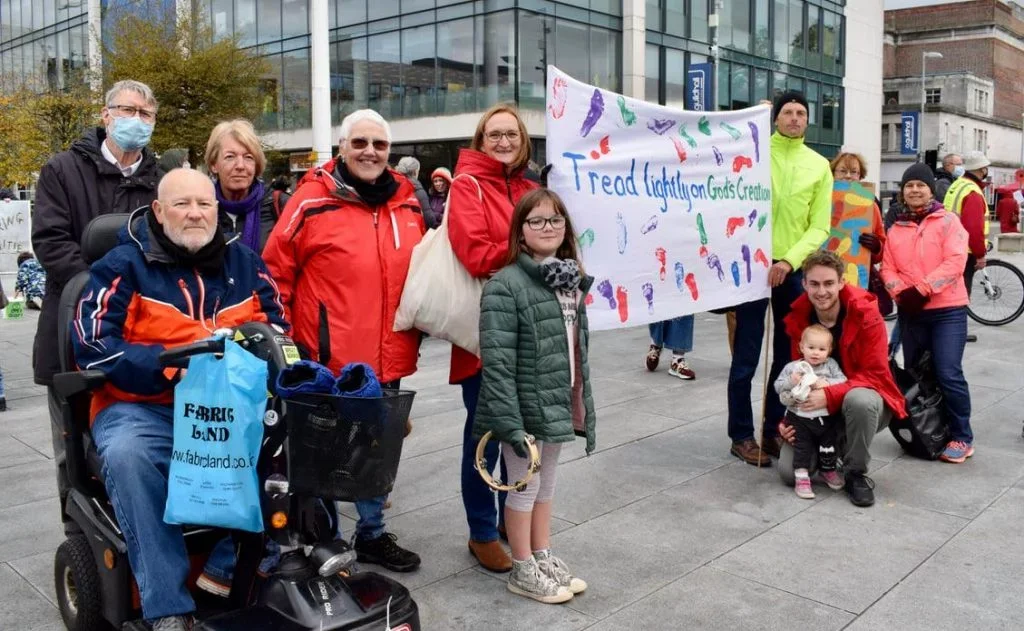
Marching for Climate Action
A dozen members of St Luke’s congregation participated in a march through Southampton as part of the COP26 Coalition’s “Global Day for Climate Justice” in November 2021.
We called for more urgent action to care for God’s creation and tackle the climate crisis while holding a banner created by the children’s church which read “Tread lightly on God’s Creation”.
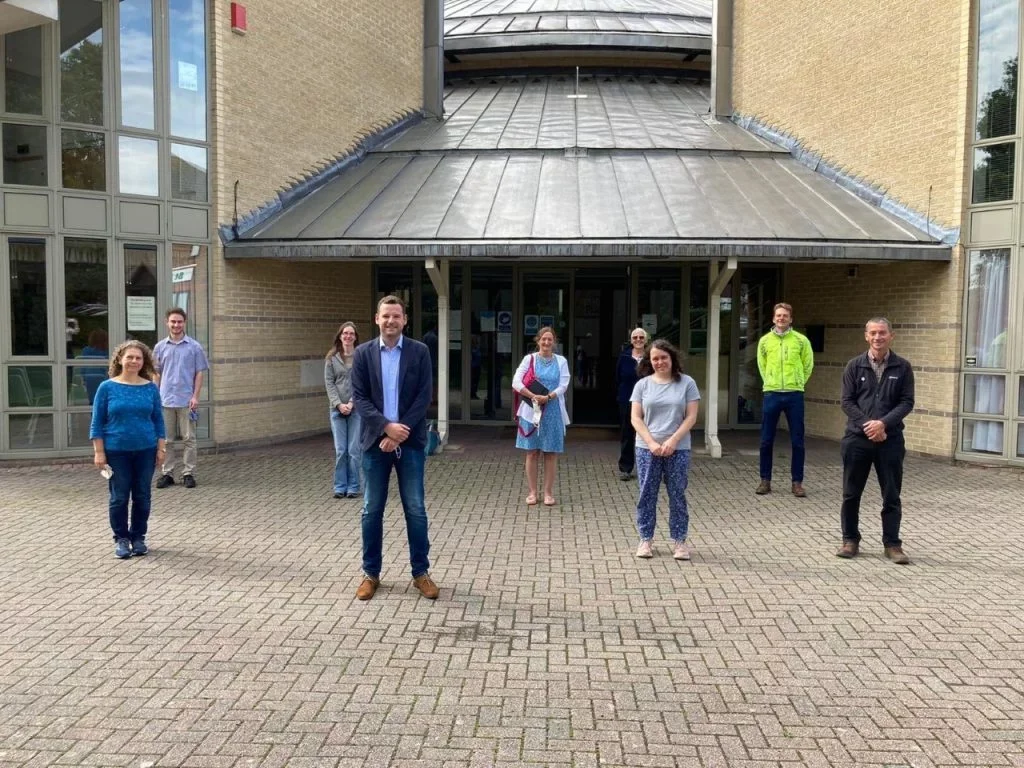
Lobbying our MP
Like many churches, St Luke’s in Hedge End have an Eco Church group who campaign for a green future locally, nationally and worldwide. They aspire to make their own church as environmentally friendly as possible, through lifestyle choices, how the church land and buildings are used, outreach activities, and via worship and teaching. The group recently met their MP Paul Holmes, member for Eastleigh, to discuss the environment and how to pursue action on climate change and a sustainable future. A number of topics were discussed including international debt cancellation, the current government’s funding of fossil fuel development overseas, and onshore wind. On a more local level, points were raised about building environmentally sustainable homes, better support for green modes of transport and harmonising recycling schemes.
Devastating wildfires are consuming parts of North America and Siberia, experts have recorded the hottest summer ever in the northern hemisphere, plastic use is threatening the oceans, and wildlife populations have fallen by more than two thirds in less than 50 years. With this backdrop, the group were keen to know whether the current Conservative government will respond to the crisis created by climate change and the pandemic in a green and sustainable way. They were pleased that Paul was receptive to their concerns and promised to take up and look into specific issues with the government, and the group look forward as Christians to holding the government to account on green issues.
Bug Church
Some of the things we’ve done so far
Poem: Lots of Small Things
What actions can I take now?
The lifestyle category above has some useful suggestions. In addition to those, consider these 4 actions:

Calculate your personal environmental footprint using WWF’s online calculator

2. Switch your home electric and gas supply
to a renewable energy supplier
Reduce your own consumption by using LED lights and turning the thermostat down.

3. Switch to using an ethical bank account
See the Ethical Consumer website for more information

4. Eat a plant-based diet / reduce meat and dairy consumption
You can also join in with Eco Church!
The Eco Church group is an active group of people from St Luke’s congregation who meet on a regular basis to put plans into action. Outside of the meetings we share environmentally-themed ideas and news.
If you’d like to join the group and be on the distribution list, please use the website contact form to let us know.
Climate and Ecological Crises
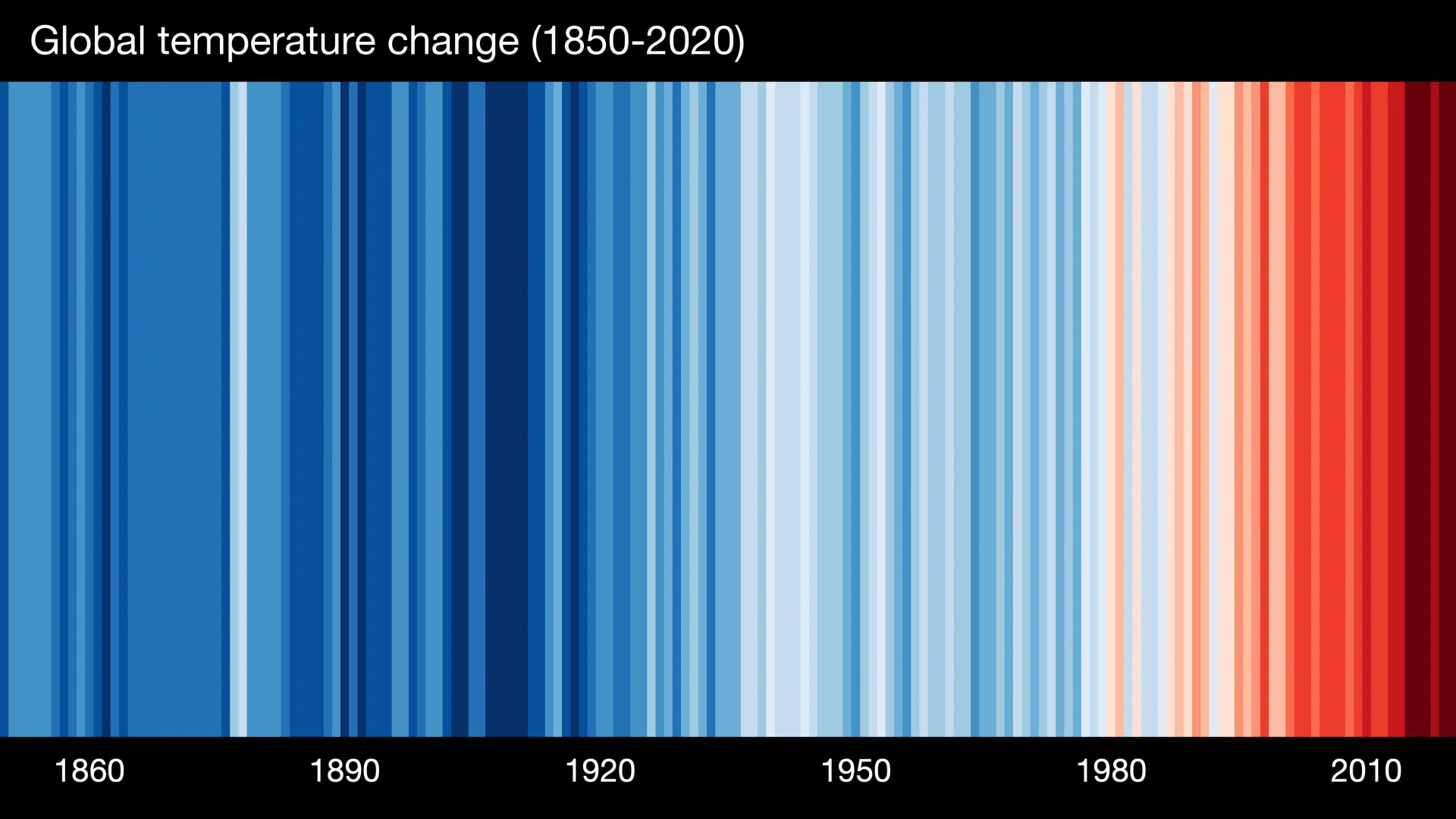
The above #ShowYourStripes graphic, created by Professor Ed Hawkins (University of Reading), is a visual representation of the change in the global temperature over the past 100+ years. It serves as a stark indicator of the extent to which we are impacting the planet and the speed at which this change is happening.
The combined effect of anthropogenic climate change and biodiversity loss is one of the biggest challenges facing humanity. People, communities and societies around the world are already suffering the consequences. Crops are failing due to extreme droughts. Families are being driven from their flooded land caused by rising sea level. Wildfire seasons are lengthening. Wildlife species are going extinct as a direct cause of changes to the climate and loss of wild spaces. This is happening now. It will get worse but there is hope if we act.
Greta Thunberg, the Swedish student who brought about the climate and ecological crisis school pupil strikes all around the world, gave a talk on why she has taken a stand.
Some of the best solutions to the climate breakdown already exist in the natural world, such as trees, peat and seagrass. See the video below for more information on natural climate solutions also featuring Greta Thunberg.
For a closer look at the influence of climate change on the environment, if you have access to it, watch “A Life on Our Planet” and “Our Planet” on Netflix. There is an associated website for the latter which contains clips like the following which summarise well the actions we all need to take to tackle this issue.
You can get in touch with our Eco Church team by sending us a message using our contact form.